
Ants are EVERYWHERE There are thousands, probably millions, of ants throughout your yard. This is…
Fire Ants in Clayton, NC: Why Mounds Return and When to Call a Professional
Quick answer: Fire ant mounds keep coming back when part of a colony survives, the ants relocate after treatment, or another colony enters the property. Killing the ants visible above ground does not necessarily reach the queen or the rest of the colony below the surface.
One isolated mound may be manageable with a properly labeled treatment. However, recurring mounds, activity across the lawn, or colonies near areas where children and pets spend time may call for professional fire ant control.
Table of Contents
Why Do Fire Ant Mounds Keep Coming Back?
A mound is only the visible part of a much larger underground nest. When fire ant activity returns after treatment, several explanations are possible.
The queen or part of the colony survived
The queen produces the colony’s eggs. If a treatment affects exposed workers but does not reach the queen, the surviving colony may continue to grow.
This does not mean every returning mound proves that the queen survived. It is one possibility among several.
The colony relocated
Disturbance or incomplete treatment may cause surviving ants to become active in another part of the lawn. A new mound a short distance away may be connected to the previous colony, but its location alone cannot confirm that.
Previously hidden activity became visible
Fire ants travel through underground tunnels and forage beyond the mound. A lawn can have activity that is not immediately obvious from the surface. What appears to be a new infestation may be activity that was already present but had not produced a prominent mound.
Another colony entered the property
Fire ant control does not create a permanent barrier around a yard. Nearby colonies can expand, and newly mated queens can establish nests in other locations. This means new activity can appear even after an earlier colony was successfully controlled.
| Possible explanation | What may have happened |
|---|---|
| Part of the colony survived | Treatment reduced visible workers but did not affect the full underground colony. |
| The colony relocated | Surviving ants constructed visible activity in another part of the lawn. |
| Activity was already hidden | Underground or nearby activity became visible only after treatment. |
| A neighboring colony expanded | Ants from an adjacent area established activity on the property. |
| A new queen formed a colony | A newly mated queen survived and began a separate nest. |
| Conditions affected treatment | Weather, timing, application, or product requirements reduced control. |
A new mound’s appearance and location usually cannot prove which explanation applies.
How the Queen and Colony Affect Fire Ant Control
A fire ant colony includes the queen, workers, developing ants, and an underground network that extends beyond the soil visible at the surface.
Workers collect food and defend the colony, but the queen is responsible for laying eggs. For this reason, killing visible workers may reduce activity without stopping the colony from recovering.
NC State Extension explains that the objective of fire ant treatment is to affect both the workers and the queen, because surviving queens can continue laying eggs. Learn more about red imported fire ants in North Carolina
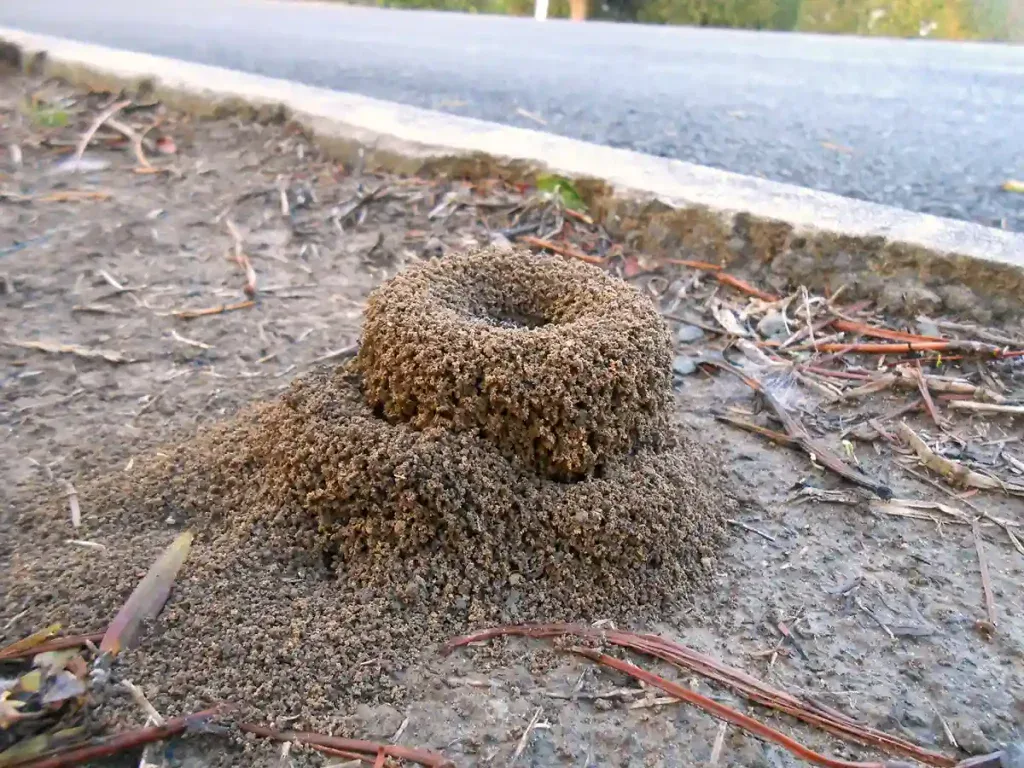
Why Surface-Only Treatments Can Fall Short
Surface treatments are not automatically ineffective. Their results depend on the type of product, application method, timing, weather, soil conditions, ant activity, and whether the treatment reaches or is carried into the colony.
Common limitations include:
- A surface spray may affect exposed ants without reaching the underground colony.
- Disturbing or flattening a mound does not eliminate the ants living below it.
- Treating one visible mound does not address other colonies elsewhere on the property.
- Baits depend on actively foraging workers finding the bait and carrying it into the colony.
- Rain, extreme heat, moisture, or incorrect application can reduce the performance of certain treatments.
- New colonies may enter the lawn after the original treatment.
Always read and follow the complete product label. Do not increase an application rate or combine products in an attempt to improve the result.
Avoid kicking, digging into, burning, or probing a suspected mound. Fire ants can respond quickly and sting repeatedly when their colony is disturbed.
| Approach | May be considered when | Important limitation |
|---|---|---|
| Individual-mound treatment | A limited number of mounds have been identified | It does not address colonies elsewhere in the lawn |
| Broadcast treatment | Multiple colonies affect a larger area | Performance depends on the product, site conditions, timing, and label requirements |
| Combined approach | Activity is recurring or widespread | Reinfestation can still occur, so monitoring may be needed |
NC State Extension recognizes individual-mound and broadcast applications as distinct control approaches. The appropriate method depends on the property, infestation, product label, and risk of contact. Review the NC State Extension guidance.
When Should You Call a Professional?
Consider calling a professional when mounds repeatedly return, several colonies appear across the lawn, activity is near high-use areas, or previous treatments provide only temporary control. Professional help may also be appropriate when identification is uncertain, or the affected area is too large for practical mound-by-mound treatment.
Someone with a known history of severe sting reactions should follow the emergency plan provided by their healthcare professional. Call 911 for trouble breathing, facial or throat swelling, fainting, or other signs of a severe allergic reaction.
Why Fire Ants Remain a Problem in Clayton-Area Lawns
Imported fire ants are established across much of North Carolina, including the Clayton and Johnston County region. During warmer periods, foraging, reproduction, and visible lawn activity can become more noticeable.
Sunny, open lawns provide common mound-building locations. NC State Extension reports that fire ants can spread through landscaping materials such as sod, nursery stock, soil, and straw. Review the North Carolina fire ant guidance.
That does not mean every pile of disturbed soil in a Clayton lawn contains fire ants. Other ants and soil-dwelling animals can produce similar signs. Identification should consider the ants themselves and their behavior, not only the shape of the mound.
Homeowners should not disturb a suspected colony to test its response. A pest-control professional can inspect the area without requiring the homeowner to provoke the ants.
What Professional Fire Ant Treatment May Involve
The appropriate treatment depends on the number and location of the colonies, the size of the property, site conditions, and the products being used.
A professional approach may combine:
- Inspection of the lawn for active and suspected mounds
- Direct treatment of identified colonies
- Broader lawn treatment when appropriate
- Product-label precautions for people and pets
- Follow-up or ongoing service based on renewed activity
Fire ant treatment is better described as ongoing control rather than permanent eradication. New colonies can enter from surrounding areas even after earlier activity has been successfully treated.
For qualifying Gold Program properties, Kumo’s approach may include lawn inspection, direct treatment of identified mounds, and broader lawn treatment. Learn more about Kumo’s fire ant control in Clayton, NC, including eligibility, property coverage, and what to expect from service.
Frequently Asked Questions
How quickly can a fire ant mound return?
Visible activity may appear again within days or later. The timing depends on whether the colony survived, relocated, remained hidden underground, or entered from another area. There is no single return timeline that applies to every property or treatment.
Does one mound mean there are others in the yard?
Not necessarily, but one mound does not reveal the full extent of the activity. Fire ants can forage away from their nest, and other colonies may be present without producing large, obvious mounds.
Can fire ants be eliminated permanently?
Permanent property-wide eradication is difficult because colonies can survive incomplete treatment, and new ants can move in from surrounding areas. Fire ant service is more accurately described as management or ongoing control.
Are fire ant treatments safe around children and pets?
Safety requirements depend on the product used. Children and pets should remain away during application and for the period specified by the product label. Follow all instructions provided by the technician before using the treated area again.
Does Flattening a Mound Make Fire Ants Leave?
No. Flattening the visible soil does not eliminate the underground colony. The ants may rebuild, create visible activity nearby, or remain below ground. Disturbing the mound may also provoke defensive activity and increase the chance of stings.
Can boiling water eliminate a fire ant colony?
Boiling water may kill some ants, but it may not reach the queen or the entire colony. It can also cause serious burns and damage surrounding turf or plants, so it should not be treated as a dependable control method.
Get Help With Recurring Fire Ant Mounds
If fire ant mounds keep reappearing across your Clayton property, treating only the visible surface may not address the full problem.
Kumo Pest Control can inspect the activity and recommend an appropriate control approach. Explore our Fire Ant Control service to learn how professional mound and lawn treatment works.